Vietnamese ghost stories connect reports of strange sounds, lights and apparitions with war, loss, local belief and family memory. Accounts include sightings near former battlefields, phantom footsteps in city buildings and stories of spirits seeking proper rites. They are told as folklore, personal experience or cultural memory; the available accounts do not establish that ghosts are real.
Key facts
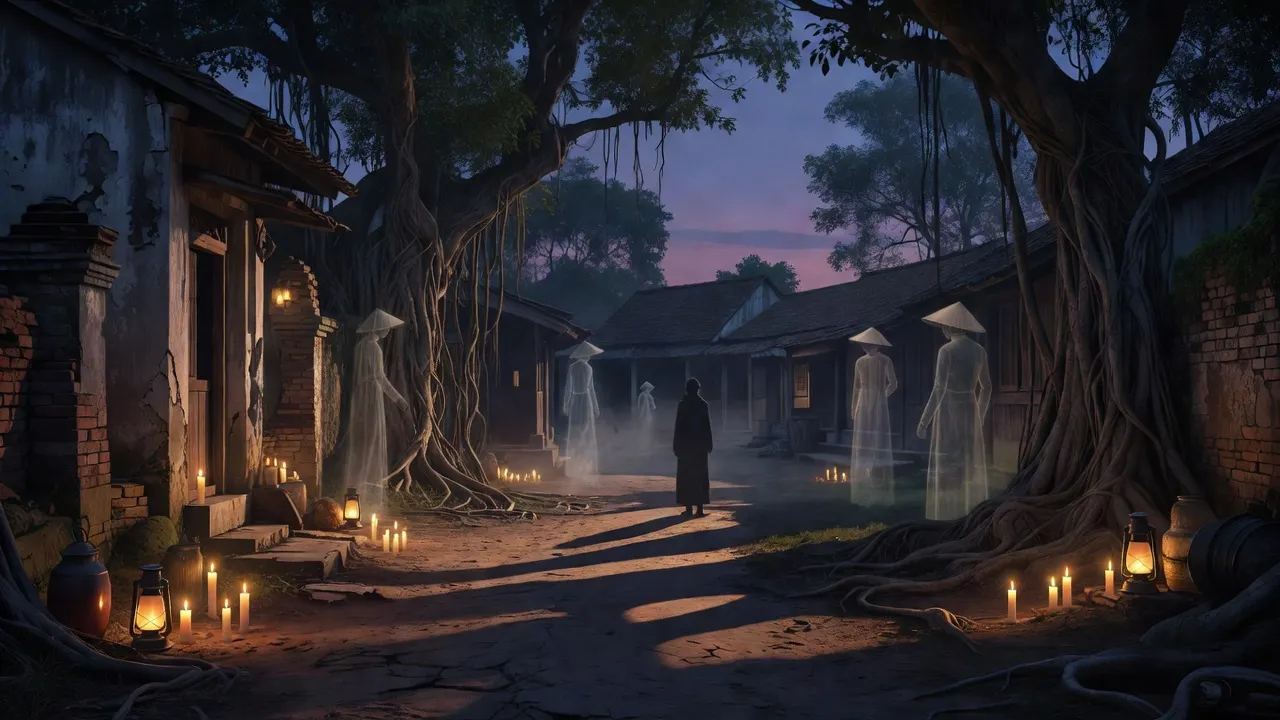
- Stories of phantom footsteps and unexplained incense are associated with buildings and alleys in Hanoi’s Old Quarter. [F8]
- Reports near the former Demilitarized Zone include apparitions, strange lights and unexplained night noises. [F13, F14, F16]
- A Cambridge University Press chapter describes an apparition story from a rural settlement in the central region once known as My Lai. [F25, F26]
- Vietnamese lore describes hungry ghosts as souls denied proper burial rites, wandering in search of offerings. [F23]
Ghost lore holds memory as well as fear
Vietnamese ghost lore draws on Buddhist teachings, Taoist spirituality, ancestor worship and historical trauma. That mixture places stories of the dead within a wider account of belief and social memory, rather than treating them only as entertainment.
One interpretation sees these stories as a way of preserving continuity between the living, the dead and the nation’s past. In this view, a ghost account can express grief or respect and help people think about harmony. [F1, F3]
The stories also vary with their settings. Hanoi’s Old Quarter is linked to reports of phantom footsteps and incense in empty hallways, while accounts from the countryside describe mysterious encounters away from city streets.
Da Lat has gained a reputation as an unofficial ghost city. Stories there feature women in white dresses and abandoned mansions in fog among pine forests and French colonial villas. These are reported legends, not proof that a haunting has taken place.
Storytelling itself remains part of the picture. The accounts can be understood as social stories even when listeners disagree about whether they describe spirits or imagination.
That flexibility matters: a tale may be received as myth, spiritual truth or inherited memory. Its meaning can lie in what it carries about loss and hope, not only in whether a listener accepts a supernatural explanation.
War accounts centre on places marked by loss
Reports of soldier apparitions are associated with former battlefield sites and burial grounds near the former Demilitarized Zone. People who had lived through the war described seeing figures there and sometimes understood them as fallen comrades. These are accounts of experiences, not independently established sightings. [F13, F14, F15]
Some reports mention strange lights and unexplained noises at night, including accounts beyond military personnel.
The chapter also notes that many Vietnamese call the conflict the American War and believe ghosts of violent, tragic deaths remain in their living environment. This perspective links a haunting story to how a community names and remembers its past.
Other reported motifs include sudden cold, footsteps with no visible source and figures appearing near tunnels or trenches. These details recur in stories about war ghosts, but they remain reported experiences rather than a reliable test for paranormal activity. [F21]
War stories can therefore hold two ideas at once: a witness may describe something they cannot explain, while the setting and memory of violent loss shape how that experience is understood.
Local beliefs give spirits different forms
Hungry ghosts, or ngạ quỷ, are described as souls without proper burial rites who wander in search of offerings. This belief gives some ghost stories a moral and ritual dimension: the spirit’s condition is connected to what the living did, or failed to do, for the dead. [F23]
What this means for you?
When you read a ghost encounter, separate what the witness says they experienced from the explanation attached to it. “I heard a noise” describes a reported event; “a spirit made it” interprets that event. Keeping those statements distinct lets you respect the storyteller without claiming more than the account supports.
If you are a visitor who hears a local haunting story, listen for what the place means to the person telling it. The story may carry grief, family memory, religious belief or a warning about a location. Ask politely whether the teller wants to discuss it, and avoid treating a painful history as a thrill or a photo opportunity.
Notice how setting shapes the account. A sound in an empty hallway, a light in a field and a figure near a former battlefield are not interchangeable experiences. The landscape and the community’s beliefs can influence how people describe what happened. That context adds meaning, but it does not prove a supernatural cause.
Online clips need the same care. A dramatic recording may be presented as evidence, yet a caption or an unexplained image cannot establish what caused it. Look for a clear description of what was recorded and what remains uncertain. Do not repeat a claim as fact merely because it has been shared widely.
It is reasonable to enjoy a frightening story while keeping a boundary between folklore and verified events. You can say that a person reported seeing or hearing something, then leave the cause open. This approach protects the dignity of witnesses and the complexity of the traditions around them.
When a story concerns war or a family tragedy, consider whether retelling it could distress someone or expose private details. Share only what is already public and relevant. Anonymise personal accounts, avoid naming private individuals, and do not invent missing details to make a story more frightening.
These stories can invite curiosity about how people remember the dead. They do not require you to accept a paranormal explanation. A careful reader can recognise both the force of an encounter and the limits of what its telling establishes.
What to do now?
- Read the account closely. Mark what the witness directly reports, such as a sound or a figure, and distinguish it from claims about the cause. Do not turn an interpretation into a confirmed event.
- Check the setting. Note whether the story concerns a city building, a rural place, a natural landscape or a location associated with war. Context can clarify why a particular legend matters to its tellers.
- Respect the people involved. If someone shares a personal encounter, ask before repeating it. Remove identifying details when needed, and do not press for more when the account touches grief or family loss.
- Handle recordings cautiously. Describe a clip as a recording that someone interprets as unusual unless its cause is established. Avoid claiming that an image, sound or sensor result proves a haunting.
- Share with care. Keep folklore, personal testimony and verified fact clearly labelled. Do not add invented dialogue, names or details, and do not present a tragic setting as a harmless attraction.
Sources
- 3amfiles.com/vietnam-war-ghosts-soldier-apparitions
- www.cambridge.org/core/books/ghosts-of-war-in-vietnam/ghosts-of-war/B93102643EA0C751CF76593B0A5C92DD
- dyerbolical.com/haunted-vietnam-unravelling-the-nations-most-chilling-locations-and-paranormal-legends
About this page
Written with AI assistance from the sources listed above, then checked by automated fact, source, repetition and quality checks before publishing.
Facts and links checked on 2 November 2026. Summarises the sources linked above; check the linked source for the latest version.
How we researched this: we compiled this guide from the official and independent sources listed above, and checked the facts on the date shown. Our editorial policy explains how we choose and check sources.