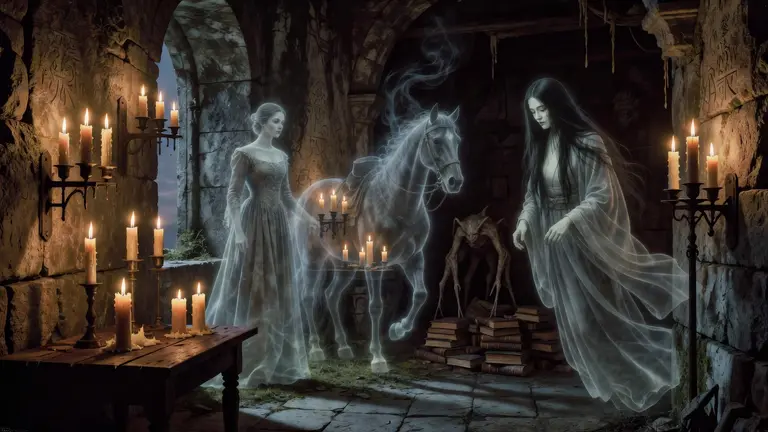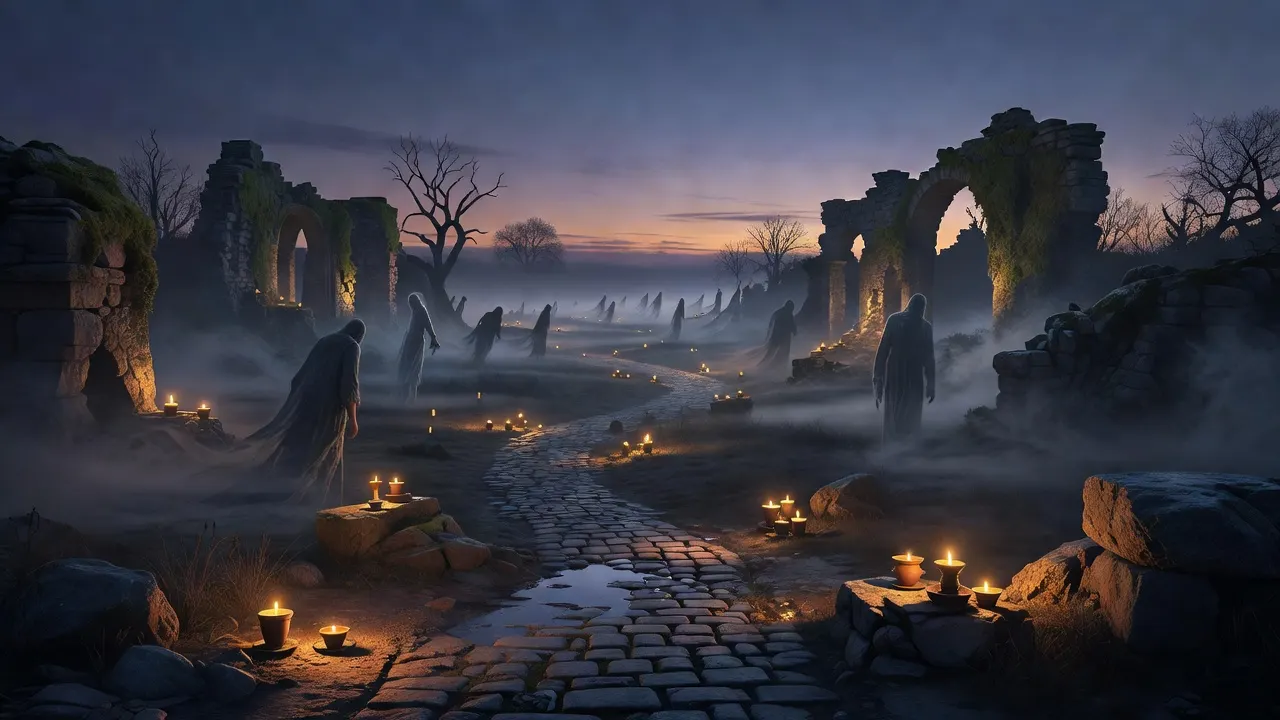
International ghost legends are best read as stories shaped by place, memory and retelling, not as proof of a haunting. Welsh accounts link apparitions to people and landscapes, while folklore research distinguishes stories that travel from those that arise independently. Compare versions carefully, preserve uncertainty and avoid presenting an anonymous account as verified fact. (Rcahmw.gov.uk)
Key facts
- Folklorists distinguish migratory legends from stories generated independently, though both processes may shape an individual case. The international legends guide describes tracking a story’s appearances and changes as a way to study it.
- The global spread of paranormal narratives involves historical routes, mass media and digital platforms. An article on cross-border paranormal trends describes these pathways.
- The fictional series Echoes follows twins Leni and Gina, who switch places and cause chaos in their loved ones’ lives. Its ending leaves uncertainty about which twin is with Charlie.
Place gives ghost stories their local shape
A haunting tale often attaches the unexplained to a particular setting. Welsh folklore offers a clear example: accounts connect apparitions with the people they encounter and the places they haunt. Wales’s monuments, wells, standing stones, castles and inns have also been associated with ghostly legends and supernatural powers. In this kind of story, landscape is more than scenery. It helps explain why a tale belongs to a community and why its details matter there.
The historical record can show how people understood a place without proving that a ghost appeared. A Welsh antiquarian published accounts of apparitions. The heritage authority describes that work as a rich historical source for Welsh supernatural folklore. It also notes that the accounts reflected the communities and landscapes through which he travelled.
That distinction is useful for international stories. A recorded account tells readers that a story was collected or published; it does not, by itself, settle what caused the reported experience. The heritage account says the antiquarian identified his ghostly tormentor through his understanding of the histories monuments told. A careful retelling can keep that historical interpretation alongside the supernatural claim, rather than choosing one as proven.
For an anonymous account, place can provide context without exposing the person who shared it. A broad setting, such as a rural road or old building, may help explain the story’s atmosphere. Specific details should appear only when the source supports them and the person’s privacy allows them.
Retelling can carry legends across borders
Some ghost stories travel; others may arise separately in different communities. Folklorists distinguish these possibilities, while recognising that both can contribute to a particular legend. The international legends guide calls a travelling story “migratory” and describes following its appearances and changes as revealing. Comparing versions can therefore show how a shared motif adapts, without assuming every similar story has one origin.
Stories can cross cultures through historical trade routes, mass media and digital platforms. The same source describes supernatural mysteries becoming shared global experiences through those pathways. This offers a useful frame for readers encountering a legend far from its claimed origin: ask how it reached this version, and what changed along the way.
Translation deserves particular care. The international guide warns that English-language accounts may be translations of translations, with details becoming firmer at each stage. A confident retelling can hide that uncertainty. Where a source does not establish an origin or a detail, label it as uncertain rather than filling the gap with a plausible-sounding explanation.
Modern fiction also shows how ambiguity can be part of a story’s design. In the Netflix series Echoes, the twins switch places; its ending leaves Charlie and the audience unsure whether Leni or Gina is with him. That is a fictional mystery, not evidence about real hauntings. But it illustrates why unresolved endings can keep an audience thinking about identity, memory and what remains unknown.
What this means for you?
When you read or share an international ghost story, separate three things: what the teller says happened, what a source records, and what anyone can reasonably conclude. A published account can document a belief or a report without confirming a supernatural cause. Welsh historical writing, for example, preserves stories of apparitions while also connecting them to communities, landscapes and understandings of local history.
If you are a reader comparing two versions of a haunting, note which details remain stable and which appear only in one retelling. That simple habit helps you avoid treating repetition as independent confirmation. Folklore research recognises both migrating stories and independently generated ones, and allows that the processes can overlap. Similarity alone does not settle which explanation fits.
Keep anonymity meaningful. Remove names and identifying details when sharing an experience, and do not add invented personal information to make a story feel more convincing. You can describe a narrator as anonymous, state that a claim is unverified, and preserve the difference between their account and your interpretation. These are writing choices, not evidence that an event occurred.
Look for the route by which a story reached you. A legend may have passed through translation, media or online sharing, each of which can reshape its details. Ask whether the source names its material, distinguishes history from folklore and signals uncertainty. If it does not, avoid supplying certainty on its behalf.
Finally, treat ambiguity as a reason to read closely, not a licence to claim more. An unresolved fictional ending can be effective because it leaves questions open; Echoes does this with the identity of the twin beside Charlie. For reported encounters, the same restraint protects both the teller and the reader: a compelling story can remain compelling without being presented as proof.
What to do now?
- Separate claims from context. Write down what the account says happened, then note what its source actually establishes. A historical record of a legend is evidence that the account exists, not automatic proof of its supernatural explanation.
- Compare versions. Look for recurring details and changes, and keep open the possibility that a legend travelled or arose independently. Do not treat resemblance alone as proof of a common origin.
- Check the route. Consider whether the story passed through translation, mass media or digital sharing before reaching you. Mark uncertain details as uncertain.
- Protect the teller. Remove identifying details and do not invent names, motives or background. Keep the account distinct from your commentary.
- Retell with care. Preserve the local setting when your source supports it, and say plainly when the cause remains unexplained. Welsh accounts show how ghost stories can be tied to people and place without settling every question about them.
Sources
- rcahmw.gov.uk/haunted-by-the-past-antiquarian-curiosity-and-a-roman-ghost-in-eighteenth-century-pembrokeshire
- worldurbanlegend.com/world-ghost-stories-international-legends-guide
- dyerbolical.com/the-globalisation-of-paranormal-trends-how-supernatural-mysteries-spread-worldwide
- screenrant.com/echoes-netflix-ending-explained
About this page
Written with AI assistance from the sources listed above, then checked by automated fact, source, repetition and quality checks before publishing.
Facts and links checked on 3 November 2026. Summarises the sources linked above; check the linked source for the latest version.
How we researched this: we compiled this guide from the official and independent sources listed above, and checked the facts on the date shown. Our editorial policy explains how we choose and check sources.