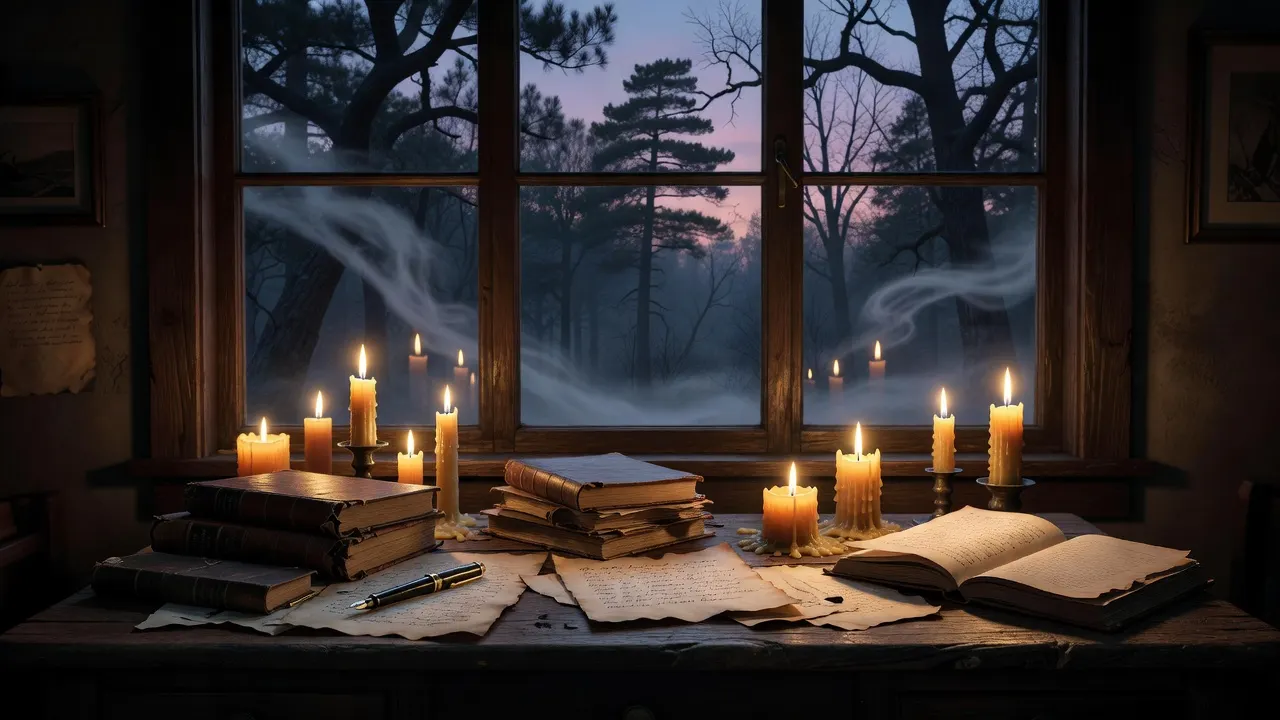
A scary story works when personal fear meets careful control: give the reader a character with something at stake, build an unsettling atmosphere, and let tension rise at a measured pace. Use prompts to begin, then revise for clear emotional reactions and a sense of the unknown. Make the fear feel close, not merely loud.
Key facts
- One guide recommends drawing on fears that unsettle the writer, using them as the story’s foundation.
- Another guide describes horror as a balance of atmosphere, tension and fear.
- Trusted peers or writing groups can read a draft and offer feedback.
Begin with a fear that matters to you
A frightening premise does not need to begin with a monster, a crime or a sudden shock; Start by asking what unsettles you, then look for a situation that makes that fear difficult to escape. One writing guide advises using the writer’s own fears as the foundation of a story. Another suggests prompts that reflect personal anxieties.
Make the fear specific enough to shape a character’s choices. The threat can remain uncertain at first; what matters is that the character has a reason to notice it and a reason to resist it. A guide to horror says the genre depends on evoking fear, suspense and the unknown. That combination gives the reader room to question what is happening while still caring about the person caught inside it.
Prompts can help when an idea will not arrive on its own. Treat one as a starting spark, not a full plot to follow mechanically. A horror-writing guide describes prompts as a way to ignite creativity and set a chilling tone. Keep the part that provokes a strong response, and reshape the rest until it belongs to your own story.
Do not force every fear into the same kind of tale. The aim is not to prove that a subject is frightening to everyone. Instead, let the premise expose what your character fears losing, discovering or admitting. That private pressure can make an unreal threat feel emotionally close, even before the story explains what it is.
Build unease through atmosphere and controlled pacing
Atmosphere gives fear a place to gather. Choose details that affect the character’s attention: a sound they cannot place, a room they avoid, or an ordinary object that seems wrong in context. Keep description purposeful. A setting becomes unsettling when it changes how the character behaves, rather than when it simply collects ominous details.
Then decide how quickly the reader should learn what is happening. A guide to horror recommends controlling the rise and fall of tension so readers stay engaged. You can slow a scene with a pause, a doubt or a small obstacle. You can quicken it when a choice becomes urgent. Varying the pressure helps prevent every moment from feeling equally intense.
Revise for clarity, character and lasting unease
A first draft is where you discover the story; revision is where you decide what the reader should feel. Read each scene for its purpose. Does it deepen the character’s fear, increase uncertainty or change what the character must do? If it does none of these, consider cutting it or giving it a clearer role.
Look closely at the line between explanation and uncertainty. Clarify the character’s immediate circumstances, but do not rush to settle every question about the threat. Readers need enough information to follow the choices and understand the stakes. They do not need every mystery answered at once. This is a practical way to preserve suspense without making the story hard to follow.
Revision can also test whether the fear feels earned. A horror-writing article links compelling stories with a strong understanding of what frightens people, alongside thorough revision. Check that a character’s reaction follows from the situation you have built. If the story asks for panic before anything has changed, add a credible warning or reshape the moment.
Outside readers can reveal where the draft loses its effect. One article suggests sharing a story with trusted peers or writing groups. Ask them where they felt curious, where they felt confused and which moment stayed with them. Use their responses as evidence about the reading experience, not as commands to rewrite every choice.
What this means for you?
You do not need a complete plot before you begin. Start with a worry, a strange image or a question that unsettles you, and turn it into a character’s immediate problem. Prompts may help spark an idea and establish its tone. Once you have a seed, write a scene that tests it instead of planning every answer in advance.
If you are a reader who wants to try writing horror, choose a fear you can approach through fiction. It need not be the most extreme fear you can imagine. A smaller unease may give you more room to build emotion and atmosphere. Keep the focus on what the character notices, wants and avoids. Those details make the threat personal without requiring elaborate explanations.
When a scene feels flat, do not automatically add a louder scare. Check whether the character has something at stake, whether the setting affects their choices and whether the reader knows enough to worry. Horror can draw on atmosphere, tension and fear together. Adjust whichever part is missing, then read the scene again for its emotional effect.
When a draft is complete, use feedback to find gaps between your intention and the reader’s experience. Trusted peers or writing groups can respond to a story. You can ask targeted questions about clarity and tension, then decide which suggestions serve the story. Revision is not surrendering your taste; it is a way to make deliberate choices.
Let your own sense of what matters guide the work. A horror guide connects lasting stories with remaining true to the writer’s passion. That does not mean every first idea must stay untouched. It means revisions should strengthen the story you want to tell, rather than turn it into a collection of borrowed scares.
What to do now?
- Choose one fear or anxiety that gives you a strong reaction. Use it as a starting point, since horror-writing advice recommends drawing on personal fears. Write down what a character might lose or have to face.
- Draft a short scene in which the character notices something unsettling. Keep the threat uncertain, but make the character’s immediate problem clear.
- Shape the scene’s pace. Add a pause where the character hesitates, and let the tension rise when a choice becomes urgent. Steady control of tension can help keep readers engaged.
- Revise for atmosphere, emotional response and clarity. Remove details that do not affect the character or the reader’s sense of uncertainty.
- Share the draft with trusted readers and ask where they felt engaged or confused. Then use their responses to guide your next revision.
Sources
- www.authormagazine.org/articles/2023/9/morgan
- behindthedraft.com/writing-prompts-horror
- www.ladypetayoung.com/post/crafting-chills-the-art-of-writing-horror-stories
- www.hollowhood.co.uk/the-ultimate-guide-to-crafting-spine-chilling-horror-stories-that-haunt-readers
About this page
Written with AI assistance from the sources listed above, then checked by automated fact, source, repetition and quality checks before publishing.
Facts and links checked on 2 November 2026. Summarises the sources linked above; check the linked source for the latest version.
How we researched this: we compiled this guide from the official and independent sources listed above, and checked the facts on the date shown. Our editorial policy explains how we choose and check sources.