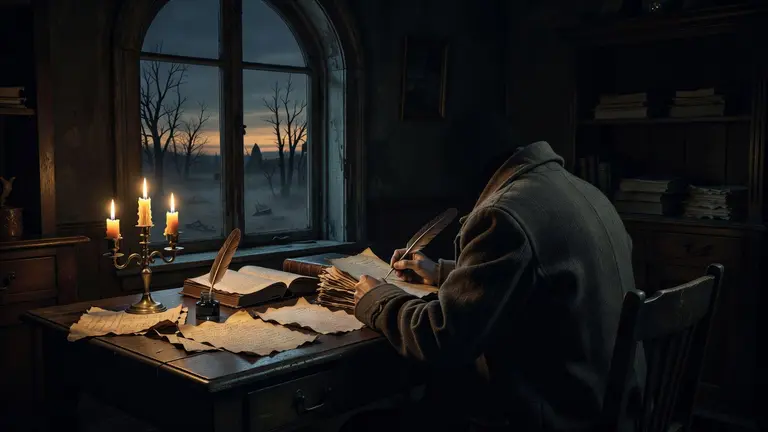
Build fear from an ordinary situation, a relatable emotional concern and a character whose choices matter. Let unease gather through hints and carefully paced tension rather than explaining everything at once. Give readers reasons to anticipate trouble, then test the draft on readers and revise where its emotional effect feels weak.
Key facts
- Starting in ordinary life is one effective way to begin a horror story.
- A strong premise and a relatable core fear can anchor a horror story.
- Foreshadowing, cliffhangers and red herrings can create unease and anticipation.
Make ordinary life feel vulnerable
Begin with a situation the character understands; Familiar surroundings give the reader a stable picture before anything unsettles it. An ordinary beginning is one effective way to start horror; Choose details that matter to the character, rather than loading the opening with ominous decoration.
Give the story a premise that can be expressed as a clear source of trouble; then connect that trouble to a fear the reader can recognise. A strong premise and relatable core fear can anchor the story. The threat need not be fully understood at once; the character’s response can make it matter before its cause becomes clear.
Think about the emotional destination before drafting the frightening scene; Horror can aim at dread, paranoia, helplessness or the sense that something is wrong. Pick one main feeling to guide the scene, then use other feelings sparingly. A character who doubts their own judgement may create paranoia; a character with no useful choice may create helplessness.
Let the character’s own concerns shape what they notice and fear; Base your story on unsettling emotions you genuinely feel. Translate that feeling into a fictional situation, rather than copying a personal event; Specific emotional understanding can give a scene a more convincing point of view.
Control what the reader knows
Suspense depends on managing information. Offer enough evidence for readers to suspect danger, but leave space for doubt. Tension and suspense are essential components of scary fiction. A small unexplained change can make a familiar scene feel less safe without forcing an immediate explanation.
Use suggestion to make the unknown unsettling. Writers can hint at the supernatural or the unknown to create unease. Keep the hint tied to what the character can perceive: a sound, an absence, or a detail that does not fit. Do not pile on clues simply to make the scene mysterious. Each one should sharpen the reader’s question.
Foreshadowing gives readers a reason to look ahead. A cliffhanger can interrupt a moment before the character learns what a warning means. A red herring can point towards a plausible but mistaken explanation. These techniques can create unease and anticipation. Use them to shape expectations, not to make every detail misleading.
Choose when to reveal information with care. Building tension with precision and knowing when to strike is key. A reveal has more force when the scene has prepared the reader to wonder. Afterward, let its consequences alter the character’s next decision; a startling fact alone cannot carry the whole story.
Make each scene change the character’s position
Before writing a scene, decide what the character wants from it and what could obstruct that goal. Then decide what new pressure the scene introduces. This keeps a frightening moment connected to the story rather than treating it as a separate display. The character’s response should affect what happens next.
Keep the character involved in the plot through choices. Let your characters drive the plot. A character who makes a decision can reveal their priorities, even when every option feels unsafe. Their choice also gives the reader something concrete to worry about beyond the threat itself.
Vary the pressure instead of keeping every line at maximum intensity. A quieter passage can allow suspicion to grow; a direct confrontation can force a response. Use the character’s attention to guide the reader between these states. If the scene explains every strange detail, the reader has little reason to keep wondering.
Look for moments where the story loses its intended emotional effect. Test your story’s fear factor on readers and revise to amplify emotional impact. Ask where a reader felt curious, uneasy or detached. Use the answer to revise the scene’s focus, timing or clarity instead of adding more frightening imagery by default.
What this means for you?
You do not need a complicated premise to begin. You need a character, a familiar situation and a fear that can press on that character’s choices. Write down what the character wants before the threat appears. Then identify what might make that ordinary goal harder to pursue.
If you are a new writer, try one scene rather than planning a whole story at once. Put the character somewhere they know, introduce one detail that feels wrong, and let them decide whether to ignore it. That decision creates a path for the next beat. You can then ask what changes if the character’s first explanation is mistaken.
Keep the reader close to the character’s understanding. When the character knows little, show what they observe and what they infer as separate things. An observation can be plain; the inference can remain uncertain. This lets the reader form a theory without treating it as confirmed. When you later clarify a clue, make its meaning matter to the character’s immediate problem.
Use your own emotional response as a starting point, not as proof that every reader will react the same way. Base your story on unsettling emotions you genuinely feel. Turn that feeling into a fictional pressure, then check whether the scene communicates it clearly.
When a draft feels flat, diagnose the gap. Does the reader understand what the character wants? Is the source of unease too vague, or already explained? Does the character make a choice with consequences? Make one targeted revision, then seek reader feedback on the emotional effect. Treat feedback as a way to find where attention or tension drops, not as an instruction to copy someone else’s style.
What to do now?
- Choose a familiar setting and a character with a clear immediate goal. Start from ordinary life, an effective opening approach for horror.
- Write one sentence describing the character’s core fear. Make the premise put pressure on that fear rather than relying on unexplained menace alone.
- Draft a small disturbance. Show what the character notices, what they think it means and what they decide to do next.
- Hold back one explanation. Add a hint that gives readers a reason to anticipate trouble without settling every question.
- Revise the scene for its intended emotion. Remove details that distract from the character’s fear or make the threat too easy to dismiss.
- Ask a reader where the scene created unease and where it lost them. Test the story’s fear factor and revise to strengthen its emotional impact.
Sources
- blog.markwatsonbooks.com/blog/horror-story-step-by-step-craft-chilling-tales
- blog.markwatsonbooks.com/blog/step-by-step-guide-writing-gripping-horror-stories
- behindthedraft.com/writing-scary-fiction
About this page
Written with AI assistance from the sources listed above, then checked by automated fact, source, repetition and quality checks before publishing.
Facts and links checked on 2 November 2026. Summarises the sources linked above; check the linked source for the latest version.
How we researched this: we compiled this guide from the official and independent sources listed above, and checked the facts on the date shown. Our editorial policy explains how we choose and check sources.