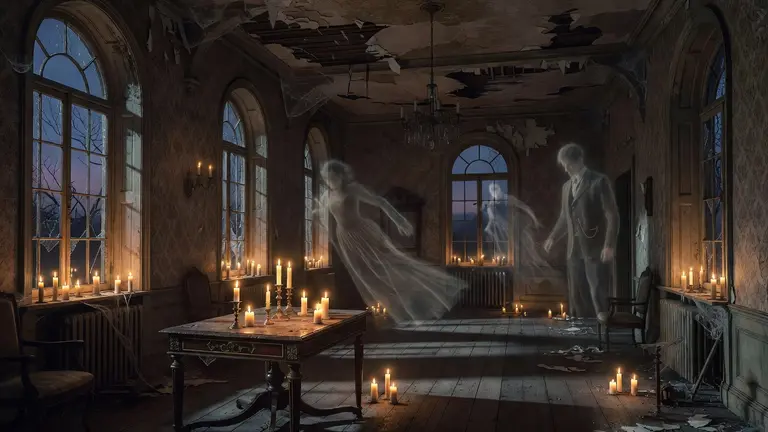
A practical guide to writing short horror fiction: finding the fear, building dread, keeping it tight and landing an ending that stays with the reader.
A good short horror story does one thing well: it makes the reader uneasy and keeps them that way until the last line. You do not need gore or a twist in every paragraph. You need a clear fear, a believable world and an ending that lands. Here is a straightforward way to get there.
Start with a specific fear
"Ghosts" is not a fear; "hearing your name called from the room you just left" is. Write down something that genuinely unsettles you and make it concrete. The more ordinary the setting, the closer the fear sits to the reader's own life.
Make the normal world solid first
Horror works by contrast. Spend a few lines on routine: the commute, the flat, the sound the boiler makes. When something is wrong later, the reader notices because you showed them what right looked like.
Build dread, then deliver
- Hint early. One small, odd detail in the first third is enough.
- Escalate in steps. Each strange thing should be a little harder to explain away than the last.
- Hold back the monster. What the reader imagines is usually worse than what you describe.
Keep it tight
Most strong short horror pieces are between 1,000 and 3,000 words. Cut any scene that does not raise tension or reveal character. Short sentences speed things up in the scary moments; longer ones work for the slow build.
Write for the ear if it will be narrated
If your story is going to be read aloud on a channel or podcast, read it aloud yourself. Trim tongue-twisters, keep dialogue tags simple ("she said"), and avoid relying on visual tricks such as text formatting that a listener will never see.
Land the ending
The best endings either confirm the fear in a way the reader did not quite expect, or leave one question open that keeps nagging. Avoid "it was all a dream" unless you have a very good reason. Ask yourself what the reader will think about when they turn the light off.
Edit with fresh eyes
Leave the draft for a day, then reread it as a stranger would. Where did you get bored? Where were you confused? Fix those two things and the story will be noticeably better.
Choose your point of view carefully
First person ("I") puts the reader inside the narrator's head and suits stories told aloud. It also lets the narrator be unreliable. Third person gives you more freedom to show things the character doesn't notice, which can build dramatic irony: the reader sees the danger before the character does.
Use all the senses
Sight is the obvious one, but sound, smell and touch are often scarier: the smell of damp in a room that should be dry, a draught from a closed window, a floorboard creaking in a rhythm that sounds almost like footsteps. Specific sensory details make the impossible feel real.
A simple structure for a 2,000-word story
- Opening, about 300 words: the normal world, the character and one small oddity.
- Escalation, about 1,000 words: three or four increasingly strange events, each harder to explain away.
- Confrontation, about 500 words: the character faces, or finally understands, the threat.
- Ending, about 200 words: the final image or line that stays with the reader.
Clichés to avoid, or subvert
- Waking from a nightmare to find it's real.
- The character who explores the noise in the basement for no good reason. Give them a reason.
- Over-explained monsters with complete backstories.
- Endings that kill everyone just for shock.
Read the masters
Classic short horror is free to read and shows how much can be done with restraint. Edgar Allan Poe's tales and M. R. James's Ghost Stories of an Antiquary are on Project Gutenberg. Notice how James spends pages on scholarly, everyday detail before a single, quietly terrifying moment.
Sharing your story
You own the copyright in your own story automatically in the UK; there's no need to register it. If you submit to a channel, podcast or magazine, read their terms to see what rights you're giving them. Don't build your story on someone else's characters or copy passages from other works without permission.
Sources and further reading
- Project Gutenberg: The Works of Edgar Allan Poe
- Project Gutenberg: classic ghost stories by M. R. James
- GOV.UK: How copyright protects your work
Facts checked on 20 October 2026. Spotted an error? Tell us and we will correct it.