Cambodia’s shadows can be approached through documented history, memorial places and stories of mystery. The sources here describe records from the Khmer Rouge period, a museum associated with underground mystery and folklore, and databases mapping historic sites. They do not verify supernatural hauntings, so readers should distinguish documented evidence from legend and personal interpretation. (Tuolsleng.gov.kh)
Key facts
- The Tuol Sleng Genocide Museum holds original paper documents from the Khmer Rouge period. [F1]
- The Well of Shadows is described as an underground museum associated with mystery and folklore in Krong Battambang. [F3, F4]
- The Documentation Center of Cambodia says its mission includes collecting, preserving and raising awareness of Khmer Rouge history. [F9]
Records reveal the history behind the shadows
Those papers are a different kind of evidence from a tale told around a fire or a personal account of something unexplained. They can be examined as historical documents, while a haunting story can be understood as folklore or as someone’s experience. Keeping those categories clear does not dismiss the story; it helps readers judge what it can and cannot establish.
Maps and museum settings shape the mystery
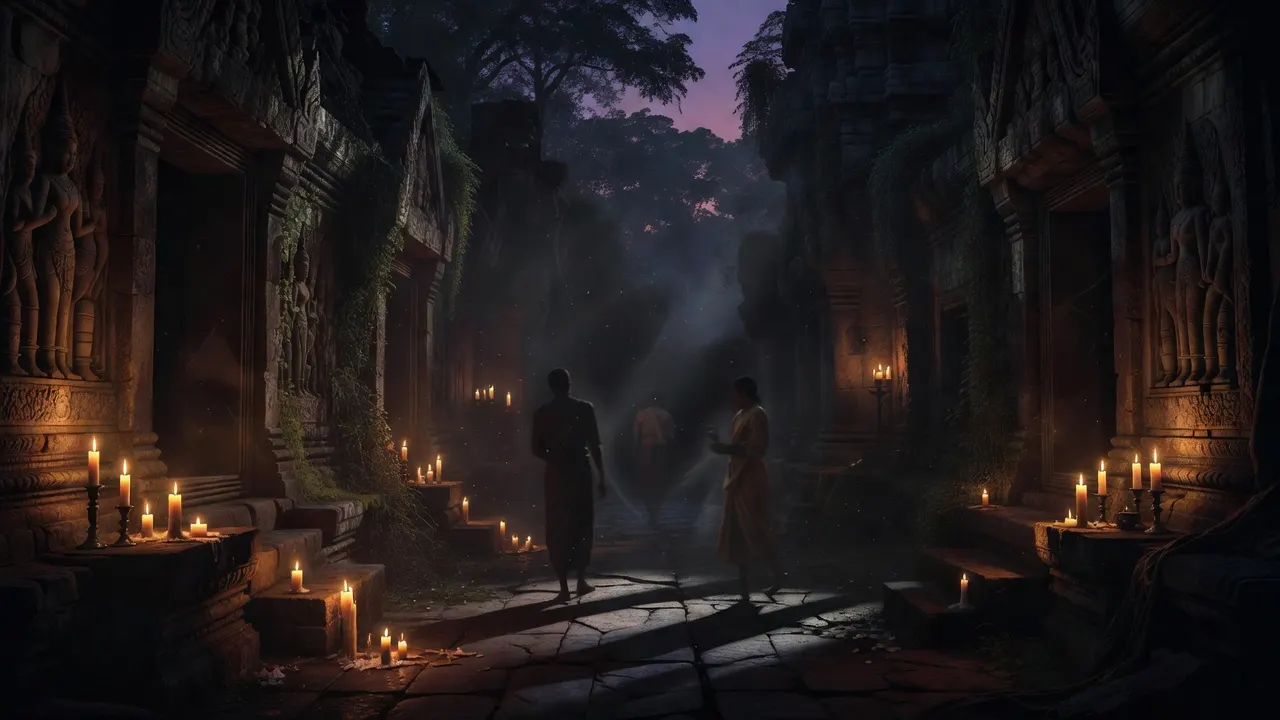
The Well of Shadows is described as an underground museum in Krong Battambang, associated with ancient mystery and folklore. [F3, F4] Its presentation makes atmosphere part of the visitor’s experience, but the source does not establish that the site is haunted. That difference is important when a place’s name and setting invite supernatural interpretations.
The same source says the museum’s artificial lighting creates dramatic effects when natural light is scarce during winter months. [F5] Low light can make a space feel strange or intense. A visitor can describe that feeling honestly without turning it into a claim about paranormal activity.
Historical mapping offers another way to handle difficult stories. DC-Cam says it created a detailed map of Khmer Rouge security offices, killing sites, mass graves and genocide memorials. [F14] It also says it surveyed and mapped districts across Cambodia. [F16] These are records of historical locations, not a catalogue of haunted places.
The databases bring together documentary and geographic material. Their listed contents include bibliographical and biographical records, photographs from the former Tuol Sleng Prison, and geographic information about mass graves, memorials and former Khmer Rouge prisons. [F20] Such resources can help readers check the context behind a story before sharing it as fact.
Folklore deserves care as well as curiosity
A legend can hold emotional weight even if it lacks proof of supernatural events. People might read a story as a warning, a memory, or a way to explain an unsettling location. It is worth asking what kind of claim a story makes and what evidence supports it, rather than simply whether it feels frightening.
When a story refers to a real location or painful history, treat the people connected to that history with respect. Avoid adding invented details to make an account more dramatic. If a source describes a museum as a place of mystery and folklore, report that description as such rather than presenting it as proof of a haunting. [F4]
Historical records can help set boundaries around interpretation. DC-Cam says it collected documents from Tuol Sleng, the Cambodian Ministry of Interior, the National Archives and other sources. [F18] That work gives readers a route towards documentary context, while leaving room to discuss why particular places or stories feel unsettling.
It is also fair to say when an account remains uncertain. A personal experience can be sincere without proving a supernatural cause. A responsible retelling separates what the witness says they experienced from what the writer can independently establish. That approach keeps curiosity alive without turning uncertainty into certainty or using real suffering as a horror device.
What this means for you?
If you are a reader drawn to haunted stories, begin by noticing whether a source offers evidence, interpretation or atmosphere. A museum’s folklore description tells you how the place is presented; it does not, by itself, confirm a ghost. A map of historic sites provides a different form of information and should not be recast as a paranormal guide.
When you encounter a claim about a Cambodian place, look for the original source and read its wording closely. Check whether it describes documents, testimony, a visitor’s impression or a legend. If the material points to historical violence, pause before using it as a frightening backdrop. The people and memories involved deserve more than a dramatic label.
If you plan to write or speak about an eerie experience, keep observation separate from explanation. You can say that a room felt unnerving, that a sound was unexplained, or that a story is told about a place, if those statements match your source. Avoid claiming that a spirit caused an event unless evidence supports that conclusion.
For historical context, consult material from the institutions that preserve records and databases. The Tuol Sleng museum describes its document collection, while DC-Cam presents its work on preservation and public awareness. [F1] [F9] These references can help you frame a story more responsibly, though they do not settle every question about folklore.
Curiosity and caution can coexist. You do not need to dismiss a legend to question an unsupported claim, and you do not need to exaggerate history to make it compelling. A careful account can preserve the unease of an encounter while showing readers where documented history ends and interpretation begins.
What to do now?
- Identify the kind of claim you are reading: historical record, personal account, folklore or speculation. Write that category down before deciding what the story proves.
- Follow the source link and read the relevant page directly. Compare its wording with any retelling, and remove details that the source does not support.
- Check historical context through the Tuol Sleng document collection or DC-Cam’s historical material. Use those resources to understand records, not to imply supernatural confirmation. [F1] [F9]
- Describe unsettling experiences precisely. Separate what someone saw, heard or felt from any explanation they attach to it.
- Use respectful language when a story touches on Cambodia’s traumatic past. Do not turn sites connected with suffering into fictional scenes or add invented victims, events or testimony.
- Share uncertainty plainly. If the source offers atmosphere or folklore rather than verification, label it that way and let readers make their own judgement.
Sources
- tuolsleng.gov.kh/en/collections/conservation-lab/documents
- www.realjourneytravels.com/places/the-well-of-shadows
- www.dccam.org
- d.dccam.org/Database/Index1.htm
About this page
Written with AI assistance from the sources listed above, then checked by automated fact, source, repetition and quality checks before publishing.
Facts and links checked on 2 November 2026. Summarises the sources linked above; check the linked source for the latest version.
How we researched this: we compiled this guide from the official and independent sources listed above, and checked the facts on the date shown. Our editorial policy explains how we choose and check sources.